




Jointly organized by the Palace Museum and the Cultural Heritage Administration of the Xizang Autonomous Region, together with several other cultural institutions, the exhibition “Beyond Time: The History, Culture and Art of Sakya Monastery” officially opened to the public on Tuesday at the Main Hall and the East Wing Gallery of the Meridian Gate (Wumen) in the Palace Museum. Grounded in achievements of relevant academic research, the exhibition brings together more than 200 rare and valuable artifacts across four sections: “The History of Sakya Monastery,” “Grand Unity,” “The Culture and Art of Sakya Monastery,” and “Treasures of Sakya Monastery.” Through tracing the history of the millennium-old Sakya Monastery, the exhibition showcases its distinctive artistic traditions, and explores its significant role in the development of China as a unified multi-ethnic country. It will run through May 10, 2026.
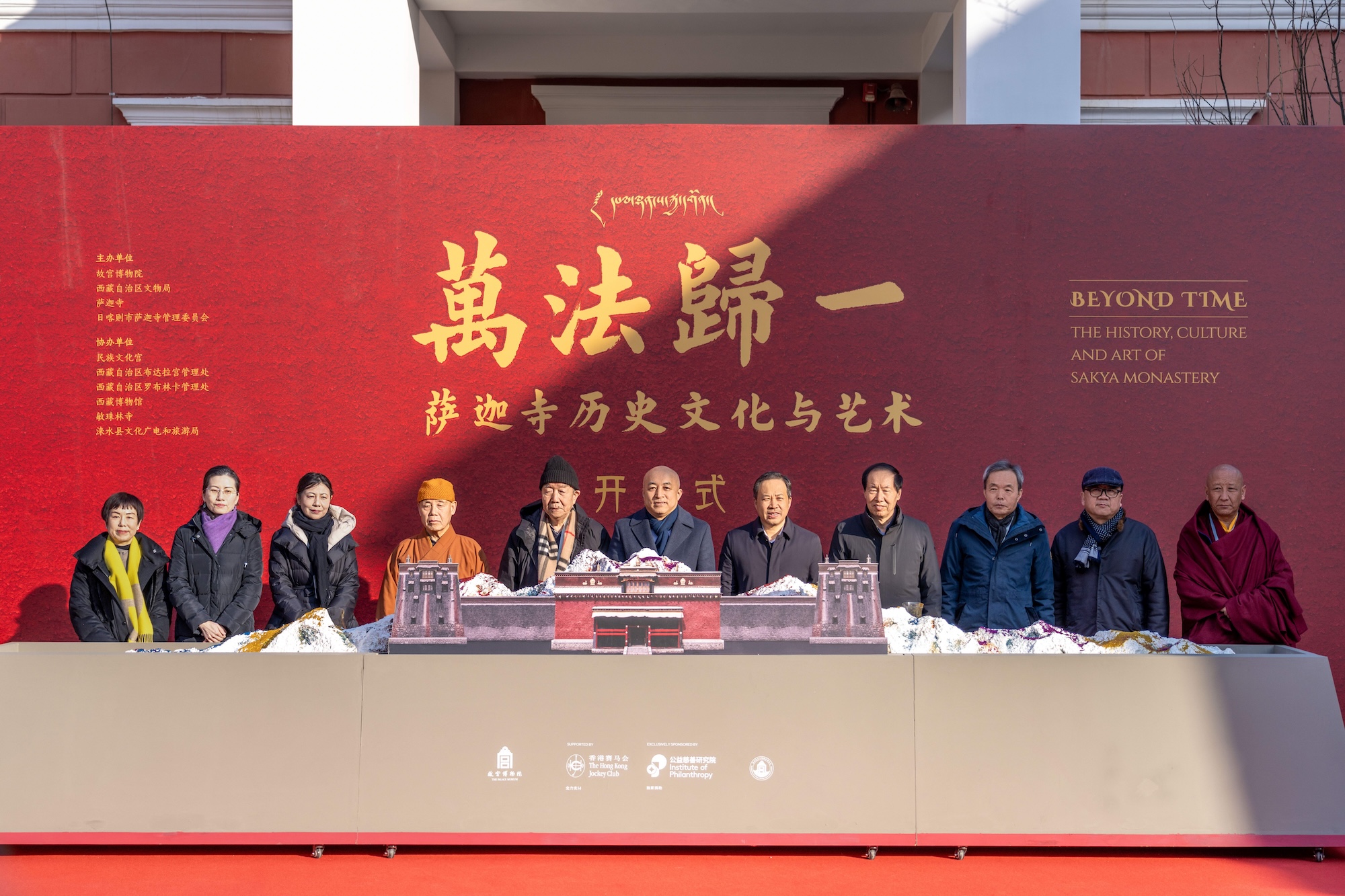
The opening ceremony of the exhibition was held on Monday at the Hall of Embodied Treasures (Baoyun lou) in the Palace Museum. The event was attended by Wang Xudong, member of the Party Leadership Group of the Ministry of Culture and Tourism (MCT) and director of the Palace Museum; Xu Zhitao, member of the Party Leadership Group and vice chairman of the People’s Government of the Xizang Autonomous Region; Zheng Xinmiao, former director of the Palace Museum; Liu Yuzhu, chairman of the China Foundation for Cultural Heritage Conservation; Yanjue, president of the Buddhist Association of China; Song Xinchao, chairman of the Chinese National Committee for the International Council on Monuments and Sites; Sun Jiwei, a first-level inspector of the Office for the Organization and Research of Ancient Books under the National Ethnic Affairs Commission; Du Haijiang, Party secretary and deputy director of the Palace Museum; Zhang Ling, a second-level inspector of the Department of Intangible Cultural Heritage of the MCT; Tenpa Yarphel, a second-level inspector of the General Office of the People’s Government of the Xizang Autonomous Region; Zhao Xingbang, member of the Party Leadership Group of the Department of Culture and Tourism of the Xizang Autonomous Region, and Party secretary and deputy director of the Cultural Heritage Administration of the Xizang Autonomous Region; Lodro Gyatso, member of the National Committee of the Chinese People’s Political Consultative Conference and executive deputy director of the Sakya Monastery Management Committee; and Winnie Yip, head of Charities (Culture; Sports; Community Engagement) at the Hong Kong Jockey Club. Also present were representatives from institutions affiliated with the MCT and the National Cultural Heritage Administration; relevant departments under the People’s Government of the Xizang Autonomous Region and the Beijing Municipal People’s Government; the Institute of Philanthropy (the exhibition’s exclusive donor); as well as representatives from related associations, academic societies and foundations, participating cultural institutions, and invited partner organizations. The opening ceremony was presided over by Wang Yuegong, deputy director of the Palace Museum.
Founded in 1073, Sakya Monastery stands majestically on the Qinghai-Xizang Plateau, between the Himalayas and the Yarlung Zangbo River. It is the birthplace of the Sakya Sect of Tibetan Buddhism. Drawing on cultural traditions from multiple ethnic groups and artistic influences from neighboring countries and regions, the Sakya Sect developed a distinctive legacy, leaving a remarkable imprint on the history of Chinese art and culture as well as on the development of China as a unified multi-ethnic country. In the 13th century, Sakya Pandita and his nephew Phagpa led a delegation to meet the Mongol prince Godan at the historic Liangzhou Talks. This meeting made a significant contribution to Xizang’s formal incorporation into the centralized administration of the Yuan dynasty (1271-1368) and helped lay the foundations for a unified multi-ethnic nation.
As a guardian and steward of fine traditional Chinese culture, the Palace Museum is committed to preserving the authenticity and integrity of cultural and historical heritage in its collection. Since the Palace Museum and the Xizang Autonomous Region signed a strategic cooperation framework agreement in 2015, the two sides have steadily deepened collaboration in the field of cultural heritage. Together, they have presented major exhibitions such as “The Fortune and Longevity of Sumeru: An Encounter between the Tashi Lhunpo Monastery and the Palace Museum” and “Auspicious Beginnings: Joint Exhibition of Artifacts from the Palace Museum and Xizang,” while also advancing systematic foundational work on the survey, documentation, and research of Xizang’s cultural heritage.
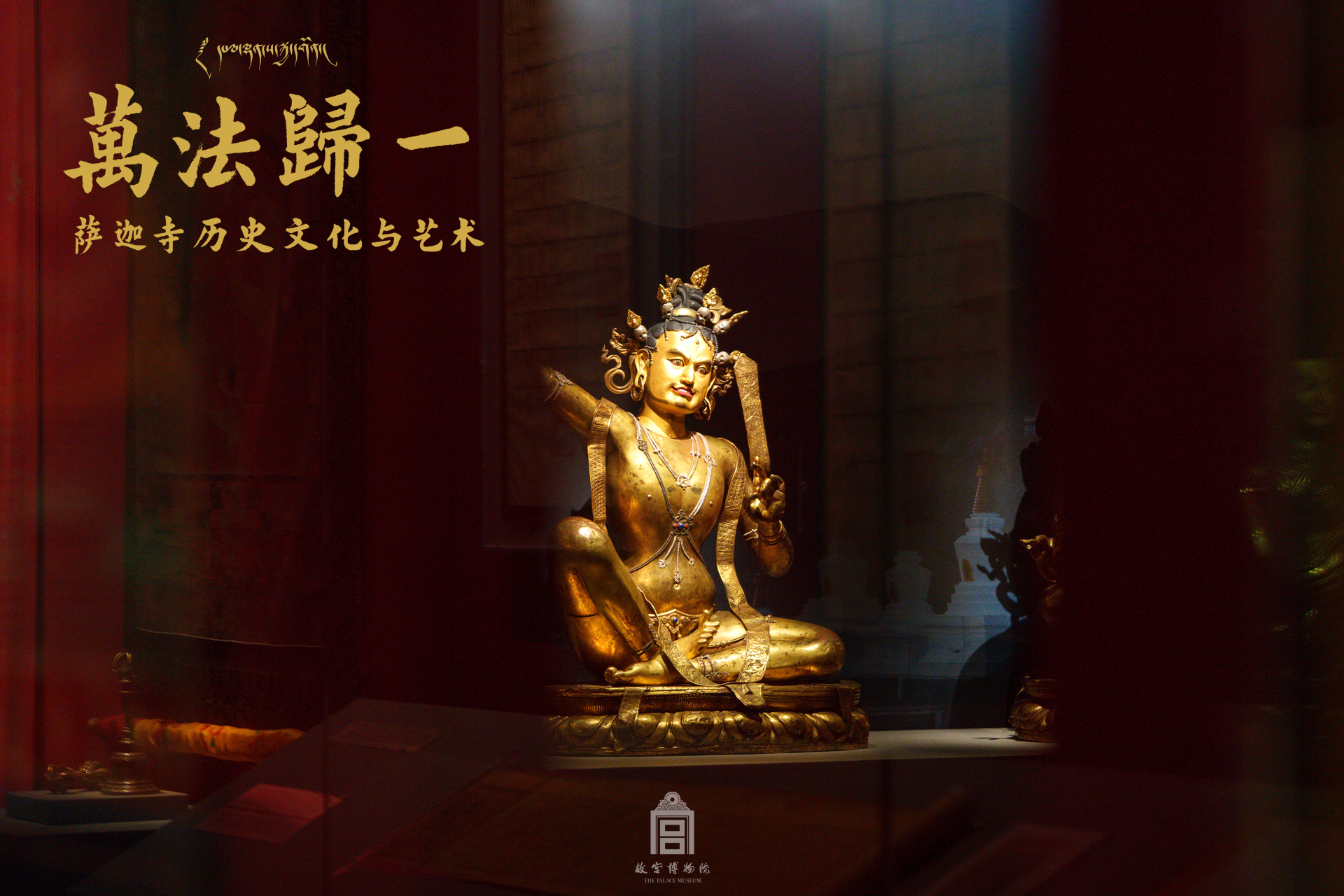
This exhibition is jointly organized by the Palace Museum, the Cultural Heritage Administration of the Xizang Autonomous Region, the Sakya Monastery Management Committee, Mindrolling Monastery, the Xizang Museum, the Potala Palace Management Office, the Norbulingka Management Office, the Cultural Palace of Nationalities, and the Culture, Radio, Television and Tourism Bureau of Laishui County, Hebei Province, along with several other cultural institutions. By presenting the historical and cultural legacy embodied in the artifacts of Sakya Monastery, the exhibition demonstrates how the diverse ethnic groups of China have worked together to shape a rich and enduring civilization. In doing so, it aims to foster a stronger sense of community for the Chinese nation and to promote the continued preservation and development of fine traditional Chinese culture.