Opening of the Exhibition The Forbidden City and the Palace of Versailles: Exchanges Between China and France in the 17th and 18th Centuries, with MOUs Signed Between the Palace Museum and French Institutions
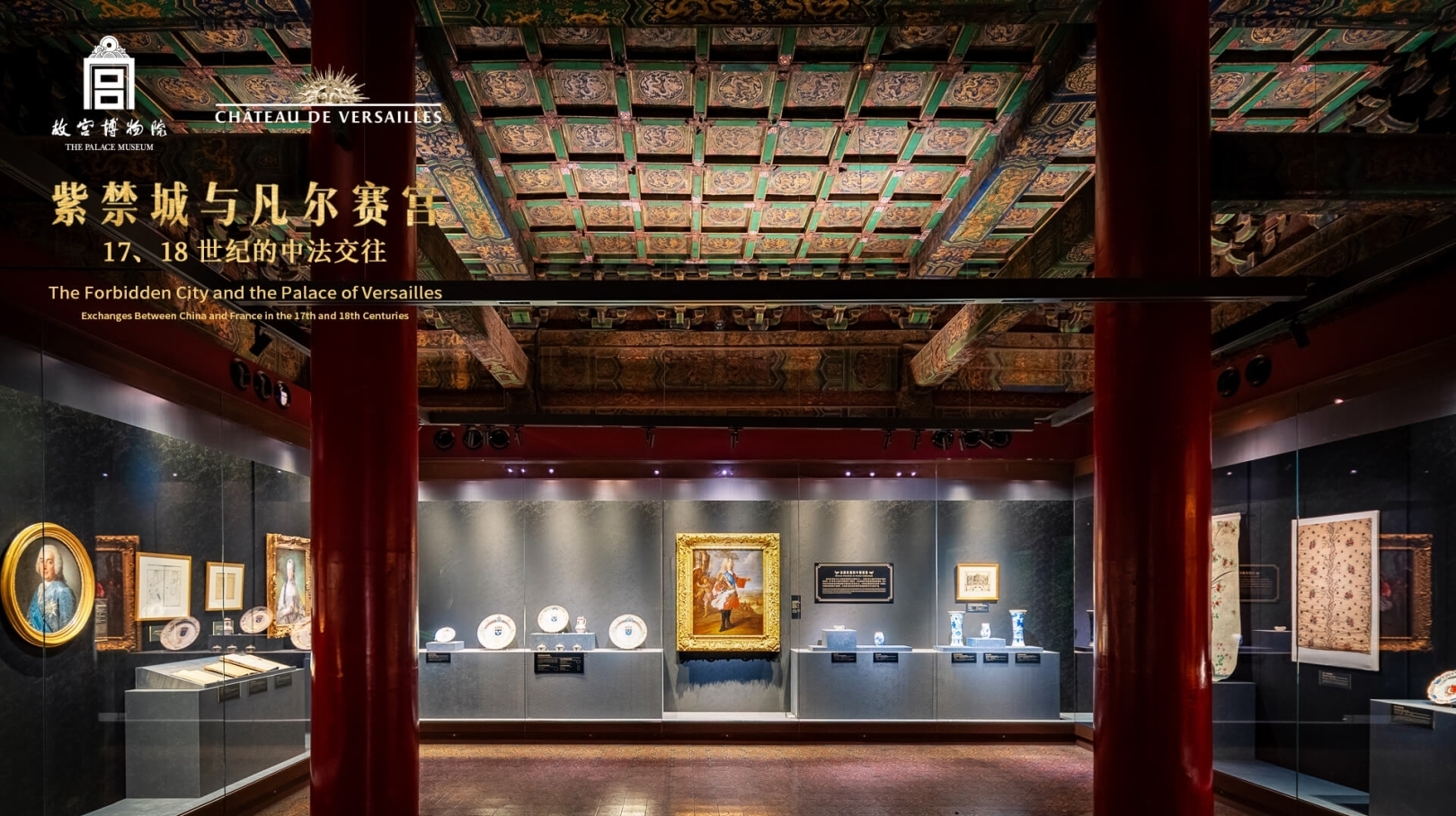
On the afternoon of April 1, 2024, the exhibition The Forbidden City and the Palace of Versailles: Exchanges Between China and France in the 17th and 18th Centuries opened in the Hall of Literary Brilliance (Wenhua dian) of the Palace Museum. The exhibition is jointly hosted by the Palace Museum and the Palace of Versailles, and sponsored by China Construction Bank, Longfor Group, and Cartier.
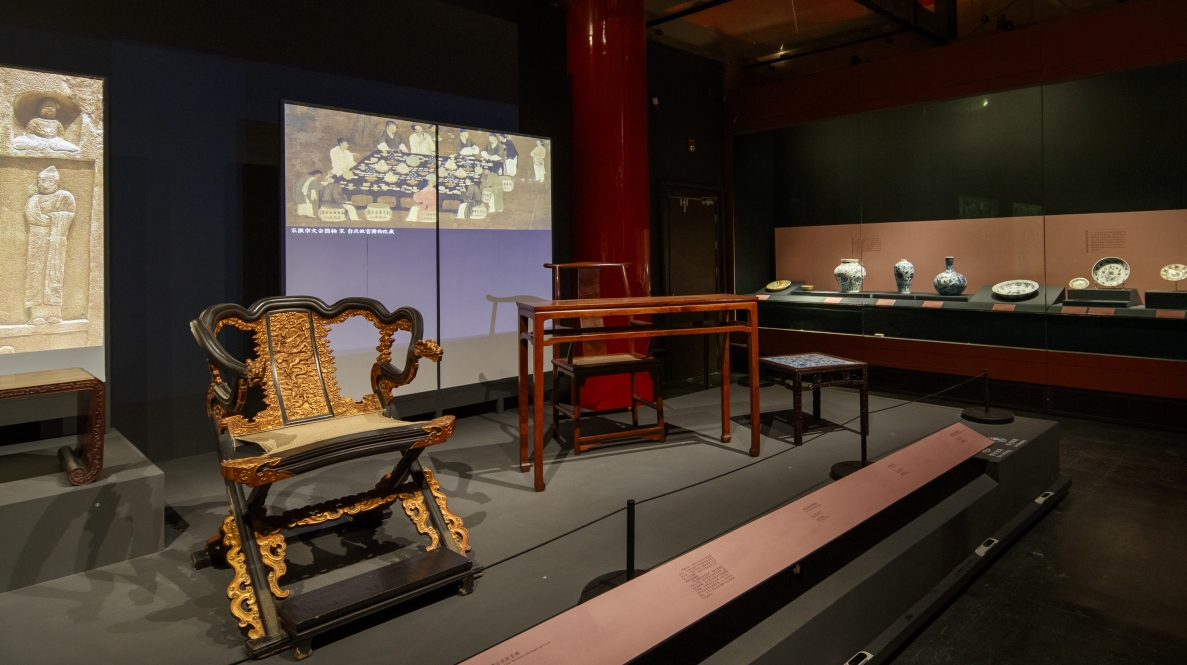
In April 2023, President Xi Jinping and President Emmanuel Macron announced the joint holding of the Franco-Chinese Year of Cultural Tourism in 2024, which marks the 60th anniversary of the establishment of diplomatic relations between the two countries. A major aspect of this year’s event, The Forbidden City and the Palace of Versailles: Exchanges Between China and France in the 17th and 18th Centuries, is about the diplomatic relations and the exchange of art and culture between China and France. About 200 exquisite artifacts from the Palace Museum, the Palace of Versailles, and other institutions showcase the mutual respect, appreciation, and learning that took place in the context of political and cultural exchange between the two nations over the span of a century. The exhibition is open to the public from April 1 to June 30 in the Hall of Literary Brilliance.
In addition, as proposed by the French Embassy in China, the opening of the 2024 Festival Croisements shall coincide with the exhibition. The Festival, inaugurated in 2006, is aimed at promoting exchange and dialogue between Chinese and French art institutions and artists, demonstrating innovation and vitality in the art of the two nations, and boosting the two peoples’ friendship and understanding of each other’s culture. After 18 years, the Festival has evolved into a major platform for cultural exchange. The Forbidden City and the Palace of Versailles formally launched the Festival Croisements in Beijing.
The Orchestra of the Royal Opera of Versailles and the China National Traditional Orchestra performed together at the opening ceremony. The former is the official orchestra of the Palace of Versailles, where they put on several hundred concerts and other music-related events each year, including performances for royalty, important guests, and leaders from other nations. The China National Traditional Orchestra, an ensemble under the Ministry of Culture and Tourism, is the largest and most instrumentally complete Chinese traditional orchestra in the world, and owes the only professional Chinese traditional chorus in the country. The Orchestra of the Royal Opera of Versailles performed the Versailles Court Opera Medley of Select Pieces and excerpts from Vivaldi’s The Four Seasons. Afterwards, the China National Traditional Orchestra performed Impression of Beijing. As for the final piece, Zhao Cong, head of the China National Traditional Orchestra, took the stage and performed Impression of a Rose with the French orchestra’s percussionists. With this splendid feast for the ears, the two orchestras jointly promoted the cultural exchange between China and France.
Before the opening ceremony, the press conference for the exhibition was held at the Archery Pavilion of the Palace Museum. Mr. Wang Xudong, director of the Palace Museum, Mr. Christophe Leribault, president of the Public Establishment of the Palace, Museum and National Estate of Versailles, Mr. Li Yun, executive vice president of China Construction Bank, Ms. Song Yao, senior vice president of Longfor Group, and Mr. Pierre Rainero, Cartier’s director of image, style and heritage, attended and addressed the press conference.
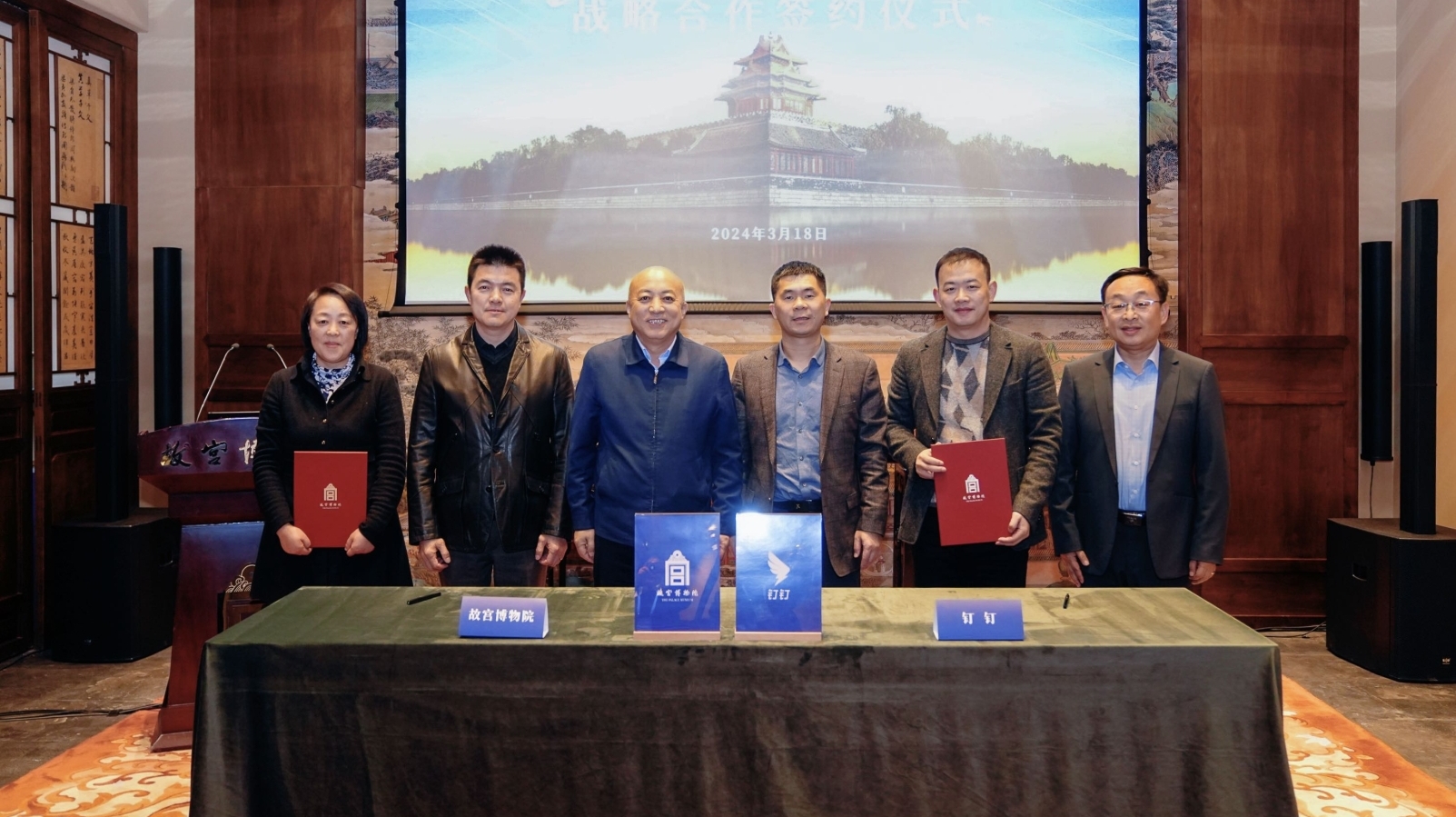
The opening of the exhibition also marks a new beginning for exchanges and cooperation between the Palace Museum and French institutions. During the ceremony, the Palace Museum signed strategic cooperation agreements with the Palace of Versailles and the Guimet Museum. During the press conference, the Palace Museum and Cartier also signed a cooperation agreement. The Palace Museum and the above three institutions all enjoy good partnership and broad prospects for cooperation. Through the signing of the documents, they jointly confirmed their intention to continue to promote exchanges and cooperation in the future.
In 2004 and 2005, the Palace of Versailles and the Palace Museum jointly held the exhibition Emperor Kangxi and the Sun King Louis XIV. To mark the 50th anniversary of the establishment of Sino-French diplomatic relations, in 2014, the Palace of Versailles held the exhibition La Chine à Versailles: Art et diplomatie au XVIIIe siècle. Highly popular among the public, these events established a strong foundation for exchange between the two institutions.
This exhibition The Forbidden City and the Palace of Versailles: Exchanges Between China and France in the 17th and 18th Centuries is divided into three sections.
The first is “The Encounter of the Dragon and the Fleur-de-lis.” The dragon is a unique creation of Chinese culture and symbol of the Chinese spirit while the fleur-de-lis is a symbol of the French royal family. These two symbols first encountered each other in 1688, when the French King Louis XIV dispatched some of his mathematicians to Beijing, who were received by the Kangxi Emperor and were instrumental in initiating official political and cultural exchanges between the two nations. Back then, the interaction between China and France was characterized by a high level of attention from both courts, exchanges in the realms of science and art, and the service of Jesuit missionaries in the Qing court as a bridge of communication. The transmission of Chinese classics contributed to the birth of modern sinology in France.
The second section, “The French Landscape in the Forbidden City,” is divided into the sub-sections of “Gifts and Commissions” and “Convergence and Innovation.” The Qing court collection features a rich variety of objects from France, which were either gifts and merchandise from the interaction between the two countries, or contributions from missionaries. With the deepening of bilateral relations, the Qing court began to commission objects from the West. The Qing court had many pieces that exhibit the influence of French craftsmanship and French cultural imprints. The profound, fascinating cultures of China and France interacted closely within the Forbidden City, inspiring rich creativity and innovation.
The third section, “Chinese Vogue at the Versailles,” is also divided into two sub-sections: “Collection and Adaptation” and “Imitation and Inspiration.” With the deepening of exchanges between the East and the West, numerous goods from China, adored by the French royal family and political leaders, were brought to Europe. Meanwhile, French dealers decorated and remodeled Chinese imports to better suit the tastes of the French. Chinese culture has greatly influenced French art styles, with the replication of Chinese porcelain playing a significant role in the development of French Chinoiserie art. China thus became a wellspring of inspiration for French artists and intellectuals, with the latter incorporating many Chinese elements in numerous areas of their work.
The period from the latter half of the 17th century to the 18th century was a golden age of cultural and court exchange between China and France, which was also when the French royal family and court expressed the greatest interest in Chinese culture. A massive quantity of Chinese craftwork and books made their way into the collections of the French court and nobility, leading to a wave of Chinoiserie art creation that initiated at the Versailles and rippled across Europe. The French court possessed a multitude of objects from China and French-manufactured Chinoiserie art, which are now important pieces of evidence for understanding this period of Sino-French relations and art exchanges. Similarly, far away in China, after King Louis XIV sent his Jesuit “king’s mathematicians” to China, numerous other French Jesuits followed in their footsteps, many of whom remained in long-term service in China, exerting an important influence on the Qing court in the realms of science, art, architecture, medicine, and cartography up through the reign of the Qianlong Emperor.
This exhibition looks at this fascinating century of Sino-French exchange. China and France, though separated by tens of thousands of kilometers, spent an extensive amount of time trying to understand each other and engaging in cultural exchange. Their mutual attraction during that period has remained solidly rooted within unforgettable memories and served as an outstanding example of exchanges and mutual learning among world civilizations.
The exhibition may be visited with a general admission ticket to the Palace Museum. Visitors can book admission tickets and pick visiting dates viathe museum’s ticketing website.